Guides
Bathroom renovation problems, and the check that avoids each
Almost every expensive bathroom problem was decided before the first tile was laid, in the floor or the wall behind it.
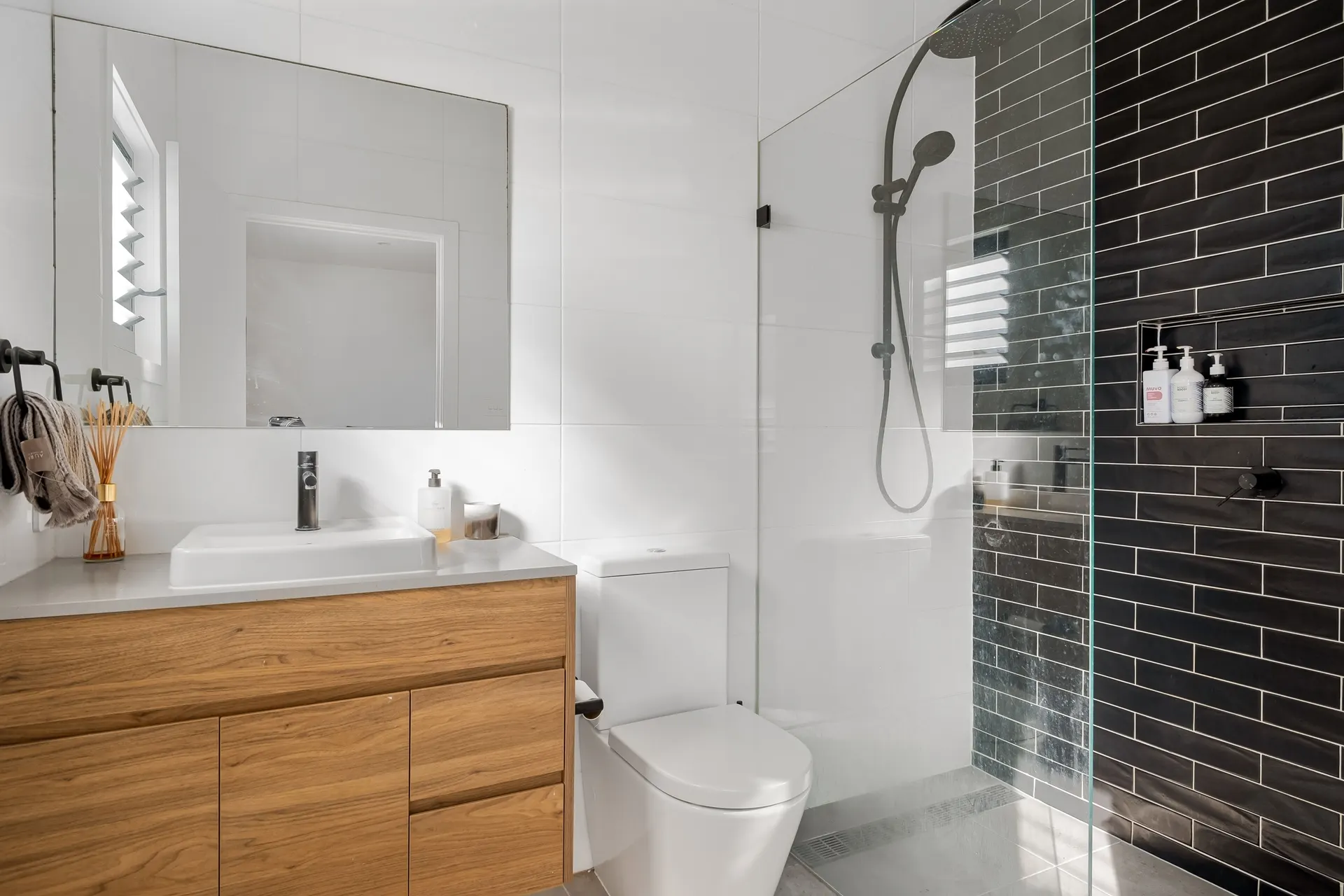
A bathroom is a very small room built to a very unforgiving set of rules. Water has to leave through a floor that falls in the right direction, the surface beneath the tiles has to be waterproof, and the air has to move. When any of those three is compromised, the failure appears somewhere else entirely — on the ceiling below, inside a wardrobe on the other side of the wall, or as mould that keeps returning.
This page collects the failures we see most often on this kind of project, the stage at which each one becomes expensive, and the check that prevents it.
The consolation is that all three are checkable at the right moment. A flood test before tiling, a fall checked with a level, and a ventilation route agreed before the ceiling is closed will prevent the great majority of bathroom failures. Each takes minutes at the time and months to correct later.
What matters most on this page
Tiling onto unprotected substrate
Water passes through grout and tile joints. The protection belongs under the tile, across the whole wet area and up the walls behind the shower.
Floor falls that go the wrong way
A fall that runs away from the waste leaves standing water in a corner, which then finds its way into the floor build-up.
Bathrooms with no way to ventilate
Without extraction to outside, a bathroom above another room becomes a humidity problem for the whole floor.
Failure, and the check that prevents it
A membrane that stops at the wall
Wet areas should be treated continuously up the wall behind the shower and around the penetrations. A gap in the corner is where it fails first.
A screen fitted to a floor that is not flat
Enclosure and screen positions depend on the tile plane. Setting them out before the floor is finished leads to gaps and silicone doing structural work.
Everything decided after strip-out
Sanitaryware, screens and tiles have to be chosen before the first fix, because the pipe positions follow them, not the other way round.
The checks worth insisting on
See the flood test
Water held in the wet area for a period before tiling is the only real proof the membrane is continuous.
Check the fall before the screed sets
Fall direction and level are easiest to correct while the floor is still soft.
Agree the ventilation route early
Where the air goes and how the duct reaches outside should be decided with the ceiling layout, not after it.
Questions we are often asked
Why does a bathroom leak again after being redone?
Usually because the floor build-up was repaired rather than rebuilt, or because the membrane did not extend far enough up the walls.
Can I keep the existing tiles?
Sometimes, where the floor and the membrane are sound and the fittings stay in place. If the floor build-up is being changed, the tiles cannot stay.
How do I stop mould coming back?
By giving the room a way to get rid of moisture. Cleaning treats the symptom; extraction and sealing the wet area treat the cause.
Related guides
- Bathroom renovation costWhat the same failures do to a budget.
- Bathroom renovation timelineWhere each failure costs you time.
- Bathroom renovation for villasThe next question people ask about the same work.
- Walk in shower installationThe next question people ask about the same work.
Start from bathroom renovation, browse the guides, or see all renovation and fit-out services. We work on homes and commercial premises across Dubai.
Tell us about the property
Describe what is going wrong and when it started. Photographs of the affected areas help us answer usefully on the first reply.
Phone
+971 56 181 0106Good for talking a job through and arranging a visit.
WhatsApp
Send a messageUseful for photographs, floor plans and measurements.
Next step
Have the bathroom checked before it is tiled
Tell us where the problem is and what you want changed. We will say which of the three essentials — fall, membrane, ventilation — needs attention.