Guides
Installing a wall-hung toilet
A wall-hung toilet makes a bathroom look larger and cleaner. Everything that holds it up and fills it is hidden inside the wall.
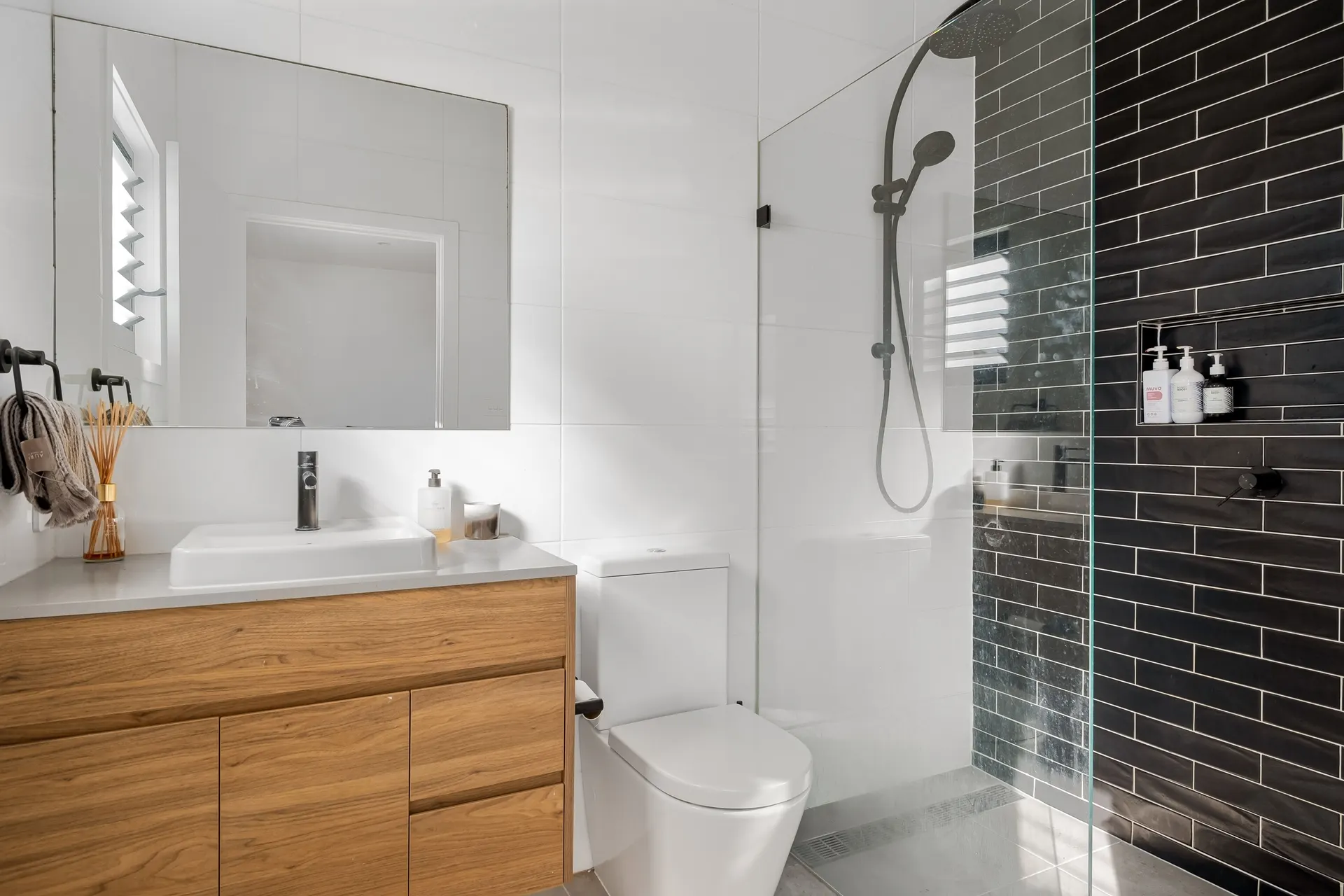
A wall-hung toilet sits on a steel support frame fixed to the floor and the wall, with the cistern concealed behind a false wall or a boxed duct. The frame carries the weight, so the pan itself only needs to line up with it. That frame, and the depth of wall needed to hide it, is the first thing to check, because some bathrooms simply do not have the space without moving a wall forward.
Element pages explain one part of a larger renovation in detail: what is being chosen, what the installation involves, and where the cost and time usually sit.
The other question is the soil pipe. A wall-hung pan connects at a fixed height and position, and the existing drainage may sit somewhere else. Moving the connection may be straightforward or may mean opening the floor. Both are known only once the existing pipe has been found.
What matters most on this page
The frame carries the load
It is fixed to a sound floor and wall. A weak partition behind it is not enough on its own.
Wall depth is the limit
The frame and cistern need a certain depth behind the finished wall. Measure before you commit.
Access must stay possible
The flush plate usually doubles as the access hatch to the cistern valves. Its position is set with the frame.
What the installation involves
Setting the frame height
The frame is adjusted to set the pan height before the wall is closed. It cannot be changed once the wall is tiled.
Connecting the soil pipe
The pan outlet meets the drainage at the frame. Its route back to the stack needs a proper fall.
Building the false wall
Moisture-resistant boards close over the frame, are waterproofed where needed, and are then tiled.
Before choosing a wall-hung toilet
Find the existing soil pipe
Its position decides how much of the floor or wall needs to change.
Check the wall behind
Solid wall, partition or external wall. Each affects how the frame is fixed.
Pick the flush plate early
Its size and position set the opening in the tiles and the access to the cistern.
Questions we are often asked
Is a wall-hung toilet strong enough?
When the frame is fixed correctly to the floor and a sound structure, yes. The pan relies on the frame, not on the tiles or boards.
What happens if the cistern fails?
The valves are reached through the flush plate opening. That is why the frame and plate must be compatible and accessible.
Does it make cleaning easier?
Yes. With the pan off the floor, the floor can be cleaned underneath, which is one of the main reasons people choose it.
Related guides
- Bathroom vanity unitsThe next component to decide in the same room.
- Bathroom ventilationThe next component to decide in the same room.
- Porcelain vs ceramic tilesA choice that shapes how this element is built.
- Bathroom renovation costHow this element sits in the overall budget.
Start from bathroom renovation, browse the guides, or see all renovation and fit-out services. We work on homes and commercial premises across Dubai.
Tell us about the property
Tell us which room, which element and what is being replaced. We will confirm the measurements and the sequence that follows.
Phone
+971 58 846 4007Good for talking a job through and arranging a visit.
WhatsApp
Send a messageUseful for photographs, floor plans and measurements.
Next step
Check your bathroom for a wall-hung toilet
Send a photograph of the toilet wall and floor. We will check the wall depth and the drainage before you choose a pan.