Guides
Microcement or tiles in a bathroom
Microcement promises a seamless room. It depends on a stable substrate and a careful applicator more than any tile does.
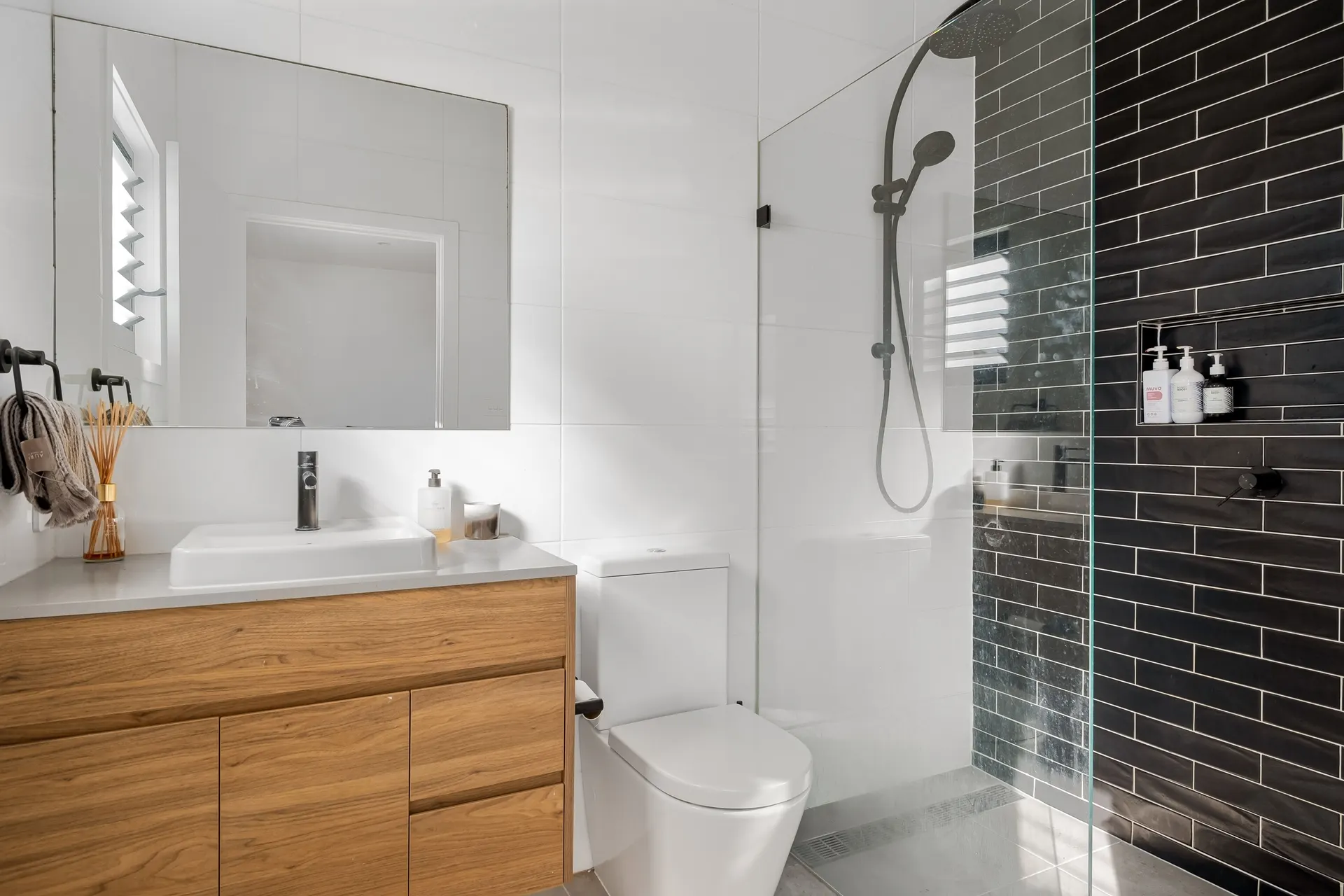
Microcement is a thin cement-based coating applied by hand in layers over walls and floors, then sealed. Its appeal is a continuous surface without grout lines, which suits minimal bathrooms. It is also thin, so it can sometimes be applied over existing surfaces without raising floor levels much.
Comparison guides set real options side by side and say when each one suits, rather than naming a winner for every home.
Tiles are more forgiving. They tolerate minor substrate movement better at joints, damaged tiles can be replaced individually, and a wide range of finishes is available. Microcement can crack if the substrate moves, and its sealer needs maintenance. In both cases, waterproofing beneath is still required in wet areas.
What matters most on this page
Seamless or jointed
Microcement has no grout lines; tiles do.
Substrate stability
Microcement is sensitive to movement; tiles cope better.
Waterproofing still needed
Neither finish replaces a proper membrane beneath in wet areas.
Living with each
Cleaning
Microcement needs suitable cleaners to protect the sealer; tiles are more tolerant.
Repairs
Microcement repairs can show; individual tiles can be replaced if spares are kept.
Appearance
Microcement varies slightly by hand application; tiles are uniform.
Before choosing microcement
Check the substrate
Cracks or movement must be resolved first.
Ask about the system
Layers, reinforcement mesh and sealer used.
Understand maintenance
How often resealing is recommended.
Questions we are often asked
Is microcement waterproof?
The sealed surface resists water, but wet areas still need a waterproof membrane beneath.
Can microcement go over tiles?
Sometimes, with preparation, if the tiles are well bonded and stable.
Does microcement crack?
It can if the substrate moves. Preparation and reinforcement reduce the risk.
Can microcement be used on a shower floor?
It can, with the right system, falls and a membrane beneath. Some installers prefer tiles in the shower and microcement elsewhere.
Related guides
- Concealed vs exposed shower valvesA related choice for the same kind of work.
- Wall hung toilet installationHow the chosen option is actually installed.
- Bathroom vanity unitsHow the chosen option is actually installed.
- Bathroom renovation costHow this choice sits in the overall budget.
Start from bathroom renovation, browse the guides, or see all renovation and fit-out services. We work on homes and commercial premises across Dubai.
Tell us about the property
Tell us which options you are weighing and the room they are for. We will say which one the existing structure and services actually allow.
Phone
+971 58 846 4007Good for talking a job through and arranging a visit.
WhatsApp
Send a messageUseful for photographs, floor plans and measurements.
Next step
Compare finishes for your bathroom
Tell us the look you want and send photographs of the existing bathroom. We will check whether microcement suits the substrate.