Guides
Choosing a kitchen splashback
A splashback is measured after the worktop goes in, and that one fact explains most of what goes wrong with it.
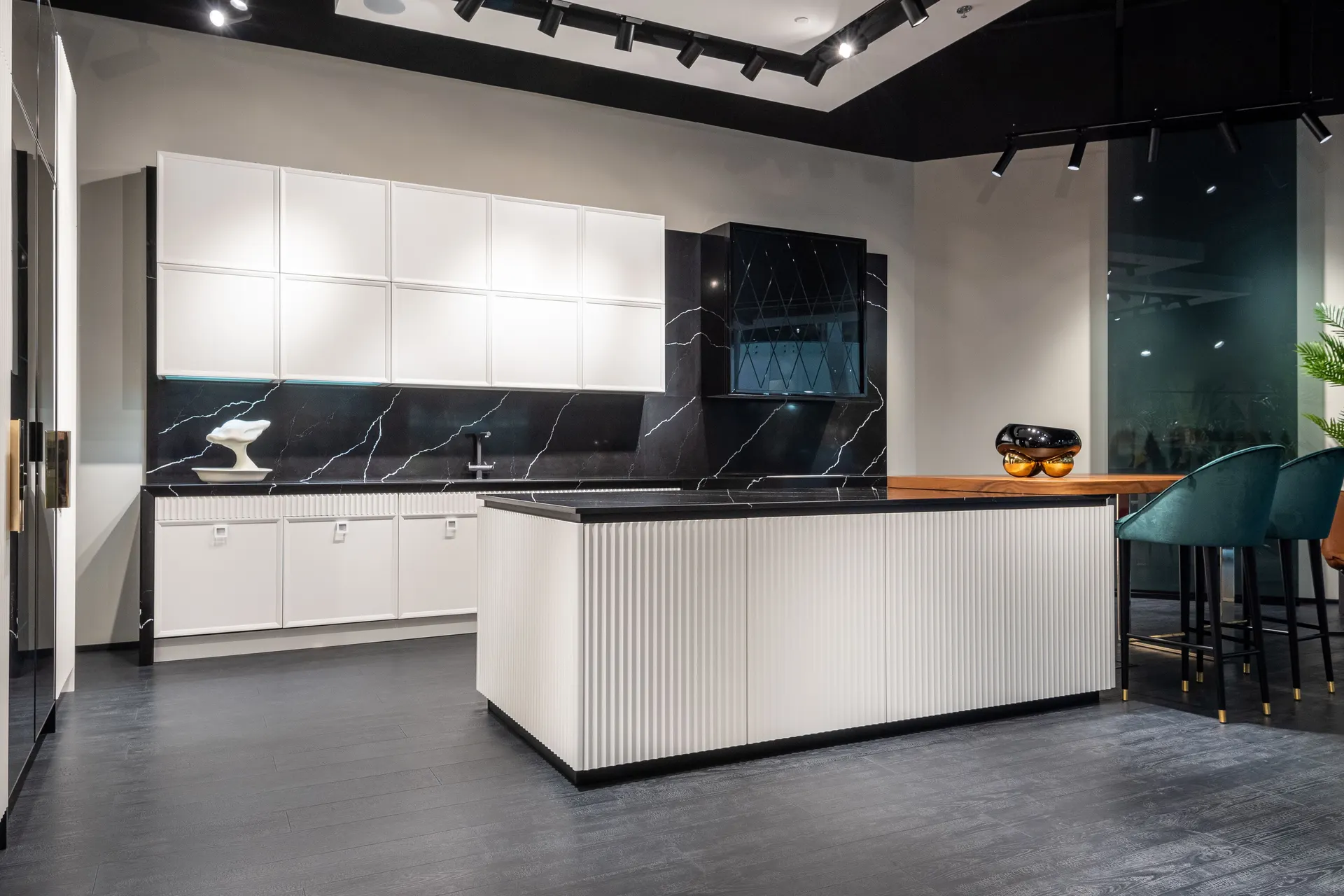
The splashback protects the wall between the worktop and the wall cabinets, and it is the part of the kitchen people look at most. Glass, stone or porcelain slab, and tiles all work, but each asks something different of the wall behind it, the area around the hob and the sockets that sit in it.
Element pages explain one part of a larger renovation in detail: what is being chosen, what the installation involves, and where the cost and time usually sit.
Because slab and glass splashbacks are cut to fit, they are templated only once the worktop is installed and the sockets are in their final positions. Changing a socket position after templating, or a worktop that sits slightly differently from the drawing, means a new panel. Most delays on splashbacks come from that order being ignored.
What matters most on this page
Templated after the worktop
Slab and glass panels are measured from the installed worktop, so they are the last element in the kitchen sequence.
Socket cut-outs are fixed early
Every socket and switch in the splashback needs a cut-out. Positions must be final before templating.
Heat behind the hob
Some materials need distance or a specific grade near a gas hob. Check the material’s guidance for the hob you have.
How the materials compare
Toughened glass
Easy to clean and can be colour-backed. Cut-outs are made before toughening, so measurements must be exact.
Stone or porcelain slab
Continues the worktop material up the wall with few joints. Heavy, and needs a flat, sound wall to bond to.
Tiles
Most forgiving of later changes and easy to repair, with more grout lines to keep clean near the hob.
Before the splashback is ordered
Fix socket and switch positions
Agree them on the drawing and on site. A late move means a new glass or stone panel.
Confirm the hob type
Gas or induction affects which materials are suitable directly behind it.
Decide the height
To the underside of the wall cabinets, a fixed band, or full height behind the hob. It changes the material quantity.
Questions we are often asked
Can the splashback be the same stone as the worktop?
Yes, and it often gives the calmest result. It needs to be ordered with the worktop so the material matches, then templated after the worktop is fitted.
Is glass practical behind a hob?
Toughened glass is commonly used there. Check the guidance for the specific glass and hob, particularly with gas.
Can I tile over the existing splashback?
Sometimes, if the existing tiles are firmly bonded and the extra thickness does not clash with the worktop or sockets. It is judged on site.
Related guides
- Integrated kitchen appliancesThe next component to decide in the same room.
- Kitchen sink and tap installationThe next component to decide in the same room.
- Quartz vs granite worktopsA choice that shapes how this element is built.
- Kitchen renovation costHow this element sits in the overall budget.
Start from kitchen renovation, browse the guides, or see all renovation and fit-out services. We work on homes and commercial premises across Dubai.
Tell us about the property
Tell us which room, which element and what is being replaced. We will confirm the measurements and the sequence that follows.
Phone
+971 58 846 4007Good for talking a job through and arranging a visit.
WhatsApp
Send a messageUseful for photographs, floor plans and measurements.
Next step
Choose the splashback with the worktop
Tell us the worktop you are considering and the hob type. We will suggest splashback options and plan the socket positions with them.