Guides
Built-in storage for apartments
In an apartment, storage is usually the problem the renovation is really trying to solve.
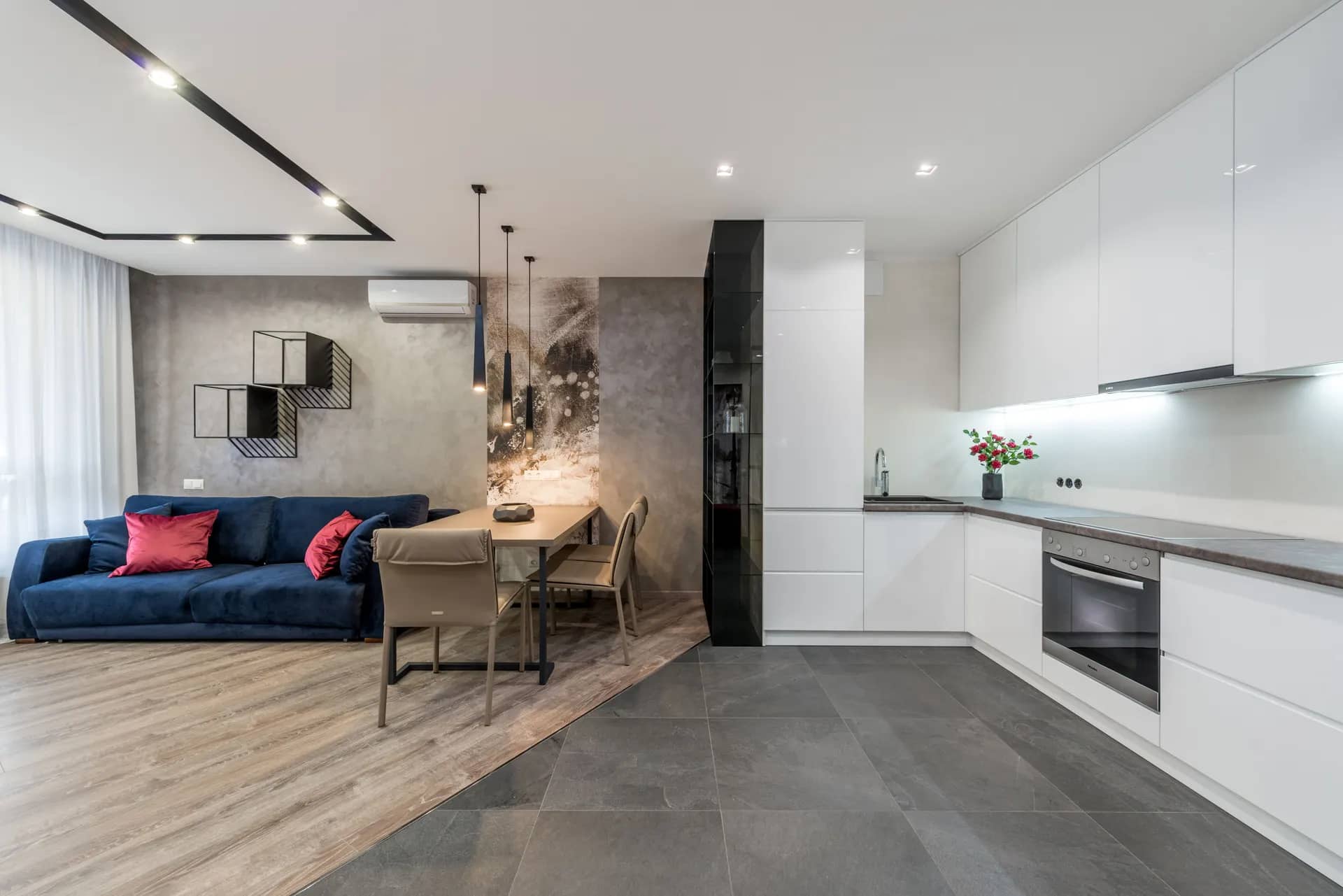
Apartment layouts often give generous living rooms but little storage, and the result is furniture pushed against every wall. Built-in joinery uses space freestanding furniture cannot reach: full height to the ceiling, into alcoves, over doorways and under windows. It also makes rooms look calmer because the storage reads as part of the wall.
Element pages explain one part of a larger renovation in detail: what is being chosen, what the installation involves, and where the cost and time usually sit.
The constraint is what is in the walls and ceilings. Sockets, switches, AC grilles, fan coil access panels and electrical boards cannot be blocked. Good joinery design works around them — with cut-outs, access doors or by moving a socket at first fix — rather than covering them.
What matters most on this page
Use the full height
Cupboards to the ceiling add storage for rarely used items without taking more floor.
Keep services reachable
Access panels, boards and grilles remain usable through doors or cut-outs.
Plan the inside
Shelves, hanging and drawers sized for what will actually be stored.
Where apartments gain storage
Entrance halls
Shallow cupboards for shoes, bags and cleaning equipment, often with a bench.
Window seats
Drawers or lift-up lids under a seat, provided the AC grille or window opening is not blocked.
Living room walls
Media units with closed storage below and open shelving above, hiding cables.
Before designing the joinery
List what needs a home
Luggage, cleaning equipment, toys, documents. It decides the shelf depths.
Map sockets and access panels
Note everything on the walls where joinery is planned.
Check the building’s rules
Some buildings restrict fixing into certain walls or require approval for works.
Questions we are often asked
Is built-in joinery worth it in a rented apartment?
Only with the landlord’s agreement, and it usually stays with the property. Freestanding storage may suit tenants better.
Can joinery hide the electrical board?
It can sit behind a door, as long as the board stays easy to reach and is not obstructed.
Will joinery cope with humidity?
Moisture-resistant boards and sealed edges are used near kitchens and bathrooms, where humidity is higher.
Related guides
- Apartment partition changesThe next component to decide in the same room.
- Apartment lighting upgradeThe next component to decide in the same room.
- Apartment renovation costHow this element sits in the overall budget.
- Apartment renovation timelineThe next question people ask about the same work.
Start from apartment renovation, browse the guides, or see all renovation and fit-out services. We work on homes and commercial premises across Dubai.
Tell us about the property
Tell us which room, which element and what is being replaced. We will confirm the measurements and the sequence that follows.
Phone
+971 58 846 4007Good for talking a job through and arranging a visit.
WhatsApp
Send a messageUseful for photographs, floor plans and measurements.
Next step
Find the storage your apartment is missing
Tell us what needs storing and send photographs of the walls you are considering. We will suggest joinery that works around the services.